Practical Packing Tips for an Organized Move: A Professional, Room‑Ready Guide by Transit Moving
Practical Packing Tips for an Organized Move: A Professional, Room‑Ready Guide by Transit Moving
Packing is where time, money, and breakage are won or lost. This guide distills professional methods into clear, repeatable steps so your boxes stay light, your fragile items are protected, and your unpacking is straightforward. Use it as a timeline and a checklist you can hand to the whole household.

Plan your packing timeline
-
Four weeks out: create a room‑by‑room inventory, flag fragile/oversized items, and decide who packs what (you vs. pros).
-
Three weeks out: order moving‑grade boxes (small/medium/large), dish packs, wardrobes, tape (2″+), paper, bubble, stretch wrap, corner/edge guards, mattress covers, and labels.
-
Two weeks out: start with least‑used rooms; pack 60–90 minutes per day to maintain quality.
-
One week out: finish secondary spaces, protect furniture, and stage “Open First” boxes.
-
48–72 hours: finalize essentials, photograph high‑value items, and separate “Do Not Load” items.
Materials that actually work
-
Boxes: small for heavy/dense (books, pantry cans), medium for mixed contents, large for light/bulky (linens, pillows).
-
Specialty: double‑wall dish packs, wardrobe cartons, mirror/art boxes, telescoping TV boxes.
-
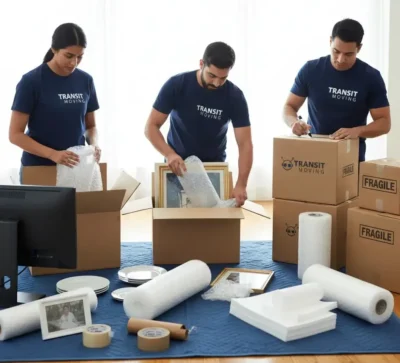
Cushioning: clean packing paper for most items; bubble for delicate glass/ceramics; foam sleeves for stems; corner protectors for frames.
-
Protection: stretch wrap for drawers/doors, furniture pads for surfaces, mattress/sofa covers for fabric items.
-
Labeling: bold room labels, color stickers per room, orientation arrows, and brief contents on two sides.
Weight and balance rules
-
Heavy items low and centered; lighter items on top; do not exceed a safe single‑person lift per box.
-
Fill voids to prevent crush and shift; domed lids signal overpacking, caved lids signal underfill.
-
Keep category purity when possible (all kitchen, all bath) so destination placement is automatic.
| Category | Pro Techniques |
|---|---|
| Kitchen | • Plates on edge like records in a dish pack; use at least two layers of paper; pad bottom and sides. • Glassware in cell dividers; wrap stems individually; fill dead space with paper to prevent rattling. • Knives in cardboard sleeves with blade protected; bundle with tape; label “Sharp.” |
| Electronics | • Photograph cable layouts before disconnecting. • Remove batteries and ink cartridges. • Use original boxes when available. • Cushion corners and screen surfaces. • Bag and label all cables. |
| Art, Mirrors, TVs | • Apply painter’s-tape “X” on glass under wrapping. • Use corner guards and rigid edges. • Pack upright in purpose-designed boxes. |
| Furniture | • Remove legs or feet when feasible. • Bag and tape hardware to the main piece. • Use pads on corners and contact points. • Protect floors with runners. |
| Clothing and Linens | • Use wardrobe boxes for hanging garments. • Roll soft goods to fill empty spaces. • Pack off-season items in large, lightweight boxes. |
| Books and Media | • Use small boxes only to avoid weight strain. • Alternate spine directions for balance. • Fill gaps with paper to prevent shifting. |
| Liquids and Powders | • Tape caps securely and bag each container. • Pack low in boxes; avoid glass containers when possible. • Label boxes “Liquids.” |
| Tools and Garage | • Sheath blades; coil cords and hoses. • Drain fuel from machines before transport. • Use sturdy totes for hardware and small parts. |
| Storage, Attic, Guest Room | Pack first; donate or discard rarely used items to reduce overall volume. |
| Living Areas | Dismount TVs; wrap frames and art; remove bulbs and shades from lamps; bundle cables neatly. |
| Kitchen (Packing Sequence) | Pack non-essential items early; leave a minimal cooking kit for daily use; check pantry dates to avoid leaks or spills. |
| Bedrooms | Finish packing seasonal clothing first; pack jewelry and important documents separately to travel with you. |
| Bathrooms | Keep a travel caddy ready; bag all liquids; discard expired or unused products. |
| Office | Back up drives and data; secure printers; use file boxes for documents; keep sensitive information with you. |
Labeling that speeds delivery
-
Color per room plus box number sequence (K‑01..K‑12), written on two adjacent sides and the top.
-
Handling codes: “Fragile,” “This Side Up,” and priority A/B/C (A = open first).
-
Door tags at destination using the same colors so crews match labels without asking.
Essentials and “Open First”
-
Per person: 2–3 days of clothing, meds, chargers, toiletries, and a water bottle.
-
Home setup: multi‑tool, box cutter, trash bags, paper towels, surface cleaner, bulbs, batteries, extension cord, first‑aid kit.
-
Comfort: coffee/tea kit, shower setup, linens, basic cookware, pet/child comfort items.
Safety and access
-
Clear pathways; stage boxes by room; keep stairs free of loose items.
-
Lift with legs, hold loads close, and use dollies/straps for heavy pieces.
-
Stage “Do Not Load” and valuables in a closed room to avoid mix‑ups.
Protecting value and simplifying claims
-
Photograph high‑value items and note existing marks; record serial numbers for electronics.
-
Use double‑wall boxes for heavy/fragile contents; avoid mixing very heavy and highly fragile items in one carton.
-
Keep receipts/appraisals together with your moving documents.
Common mistakes to avoid
-
Procrastination that forces overpacked boxes and poor padding.
-
Grocery/used boxes that crush; choose moving‑grade cartons.
-
Skipping void fill; movement inside a box causes most damage.
-
Vague labels; specificity saves time and reduces handling.
Loading day checklist
-
Walkthrough with crew: special handling, access constraints, and “Open First” plan.
-
Verify counts by room; face labels outward on the truck; separate essentials in your vehicle.
-
Final sweep: closets, cabinets, attic, garage, patio, behind doors.
How Transit Moving can help
-
Full‑service or fragile‑only packing, custom crating for art/mirrors, and materials delivery.
-
Color‑coded labeling systems and room maps for fast placement at destination.
-
Optional debris pickup/unpack assist to accelerate first‑night comfort.